
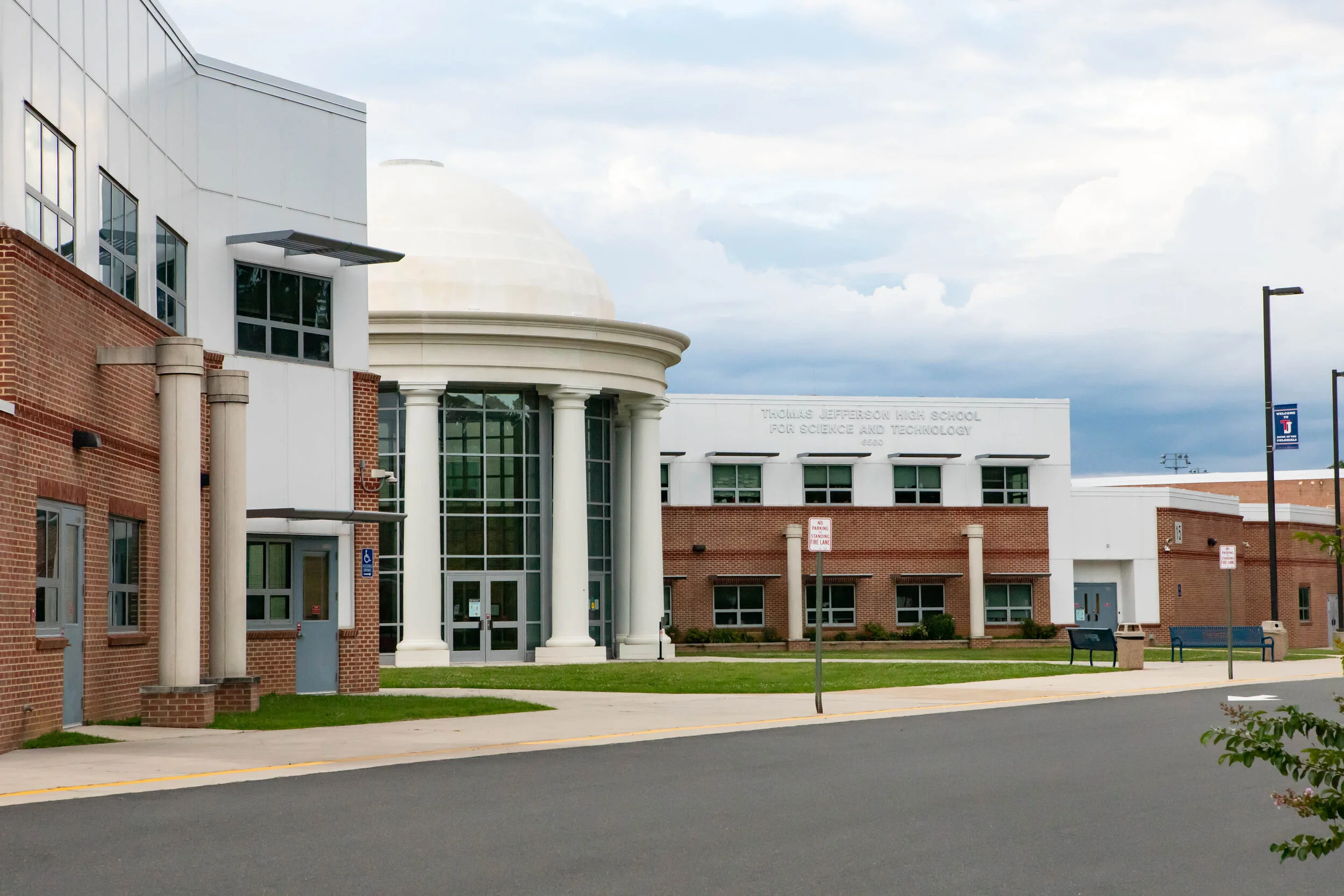
“Why TJ?” sounds like an admissions question, but it should begin as a family question. Before a student spends months preparing, they should know what TJHSST actually teaches, how its program is structured, and which parts of that experience connect to interests they already have.
Research the school, not a predicted prompt
FCPS does not publish or guarantee a specific “Why TJ?” question. Research is still valuable because it helps a student decide whether to apply and recognize authentic connections between their own experiences and TJ's program.
Why Research TJHSST Before You Apply
Prestige is not a useful plan. “I like STEM” is not much better. TJ has required course sequences, specialized electives, a four-year math expectation beyond Algebra 1, a computer science requirement, integrated freshman courses, and a senior research requirement. Those details shape daily life at the school.
A student might be excited by the chance to move from Foundations of Computer Science into data structures and advanced electives. Another might care about the integrated Biology, English, and Design and Technology experience in ninth grade. Someone else may be drawn to one of the senior research laboratories or to a research practicum. The point is not to collect impressive names. It is to understand the path.
Good research can also reveal that TJ is not the right fit. A student may prefer a base school program with more room for a particular art, language, athletic, or career pathway. That is useful information, not a failed exercise.
Start With the Official Mission
TJHSST's published mission centers on a challenging math, science, and technology environment, joy in discovery, innovation, ethical behavior, and the shared interests of humanity. FCPS also says the freshman SPS asks students to demonstrate broad Portrait of a Graduate attributes:
- Collaborator
- Communicator
- Creative and Critical Thinker
- Ethical and Global Citizen
- Goal-Directed and Resilient Individual
These are not keywords to force into a response. They are a lens for reflection. A student can ask where they have worked through disagreement, explained a difficult idea, recovered from a setback, considered the impact of a decision, or built something through iteration.
FCPS evaluates the broad attributes, not a private checklist invented by a prep company. Specific experiences and honest reflection matter more than sounding as though the student memorized the mission page.
Read the Current Curriculum, One Path at a Time
The most reliable curriculum sources are TJHSST's current flow charts and department pages. Course names and prerequisites change, so use the live pages rather than an old catalog link.
Freshman integration
TJ's ninth-grade program includes Biology, English 9, and Design and Technology as the integrated IBET experience. Research what integration means, not only what the acronym stands for. Ask whether the student enjoys connecting technical work, writing, design, and group problem solving.
Mathematics and computer science
The current math flow chart shows the sequence from Geometry or Algebra 2 through AP Precalculus and AP Calculus, followed by advanced options. The computer science flow chart starts with Foundations of Computer Science, moves into Data Structures including AP Computer Science A, and then branches into electives and research paths.
A student does not need to plan all four years in eighth grade. They should understand that later options depend on earlier prerequisites and that enjoying the foundations matters more than jumping to the most advanced course name.
Science, technology, and senior research
TJ's official science and technology flow chart lists the core science sequence, additional science expectations, engineering and technology courses, and preparation for senior research. The research program currently includes laboratories in fields such as astronomy and astrophysics, biotechnology, chemical analysis, computer systems, engineering, neuroscience, oceanography, quantum physics, and mobile or web application development, plus a research practicum option.
Do not assume a laboratory guarantees a particular project, mentor, or outcome. Use the official page to understand the program structure, then stay curious about how offerings may evolve before senior year.
Turn Research Into Useful Notes
After reading the official pages, make a short three-column note:
- What I found: one real course sequence, program, lab, or part of the mission.
- Why it interests me: the question, skill, or type of work that feels compelling.
- What I have already done: a specific experience that shows where the interest came from.
For example, “Computer Systems Lab” by itself says almost nothing. A student who has spent a year taking apart old computers, troubleshooting a home server, or learning why a program slows down has a real starting point. The same principle applies to biology, engineering, mathematics, writing, ethics, and collaboration.
Research should make the student's thinking more specific. It should not turn an SPS response into school marketing copy. If a sentence could have been copied from the course catalog by any applicant, it probably needs a personal example or should be removed.
Our work with students focuses on this distinction: understand the public process, identify experiences that genuinely belong to the student, and practice explaining those experiences clearly. The final response should still sound like the eighth grader who lived it.
Frequently Asked Questions
Does FCPS guarantee that TJHSST applicants will be asked why they want to attend?
No. FCPS publishes the SPS attributes and the broad PSE format, but it does not publish or guarantee a specific why-TJ question. Researching the school is still useful for deciding whether its program fits the student and for reflecting on authentic experiences.
What should a student research about TJHSST before applying?
Start with TJHSST's official mission, current math, computer science, humanities, and science course flow charts, and the official research-program page. Focus on pathways the student can explain in their own words rather than collecting impressive course names.
Should a student list TJHSST course names in an SPS response?
Only when a course or program is genuinely relevant to the prompt and the student's experience. FCPS does not publish a checklist that awards credit for naming courses. A specific, honest example is stronger than a catalog paragraph.
Sources and Independence
Source note: This guide uses the FCPS TJHSST mission and policies page, the current TJHSST math, computer science, humanities, and science and technology flow charts, and the official senior research program. Current official pages control if offerings change.
TJTestPrep by EduAvenues is independent and is not endorsed or sponsored by Thomas Jefferson High School for Science and Technology or Fairfax County Public Schools.
Ready to Start Your TJ Prep Journey?
Get expert guidance on building a competitive TJHSST application with our comprehensive prep programs.
Explore Our Programs